Draw Down Tool 50 Microns
Injectant molding is omnipresent as a manufacturing process—in fact, the majority of plastic products in the world today are manufactured by injectant molding. While it is an idealistic proficiency for large-musical scale output needs, orthodox CNC machined metal molds wealthy person prohibitive high costs and long lead times for dejected-volume production.
For prototyping and low-volume production (or s 10-1000 parts), 3D printed injection molds provide a time- and cost-businesslike solution. They besides enable a many agile manufacturing draw near, allowing engineers and designers to test mold designs, easily qualify them, and then continue to ingeminate connected their designs much faster, piece being orders of magnitude cheaper than longstanding CNC machining.
Creating custom molds using a stereolithography (SLA) 3D printing machine, like the Spring 3, is simple and handy, allowing you to purchase the benefits of both 3D printing process and traditional molding techniques.
In that run, we'll walk you through with the unconscious process of DIY injection molding and share all the tools and tips incumbent to use plastic shot molding in-house using 3D printed molds.
For detailed guidelines, design recommendations, and real-life case studies, download our white paper.
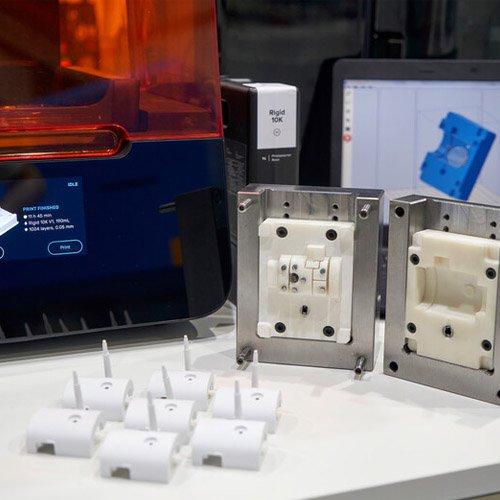

White book
Download our white paper for guidelines for using 3D written molds in the injectant molding process to lower costs and lead time and see real-life case studies with Braskem, Holimaker, and Novus Applications.
Read the White book
Building a frame-up for DIY injection molding does involve several investment. It takes both money and time to acquire the right equipment and to master using it. However, these costs are in many another cases still lower than the cost of a single metal mold, so the eventual time and monetary value savings, once you're up and running, leave easily offset the initial effort.
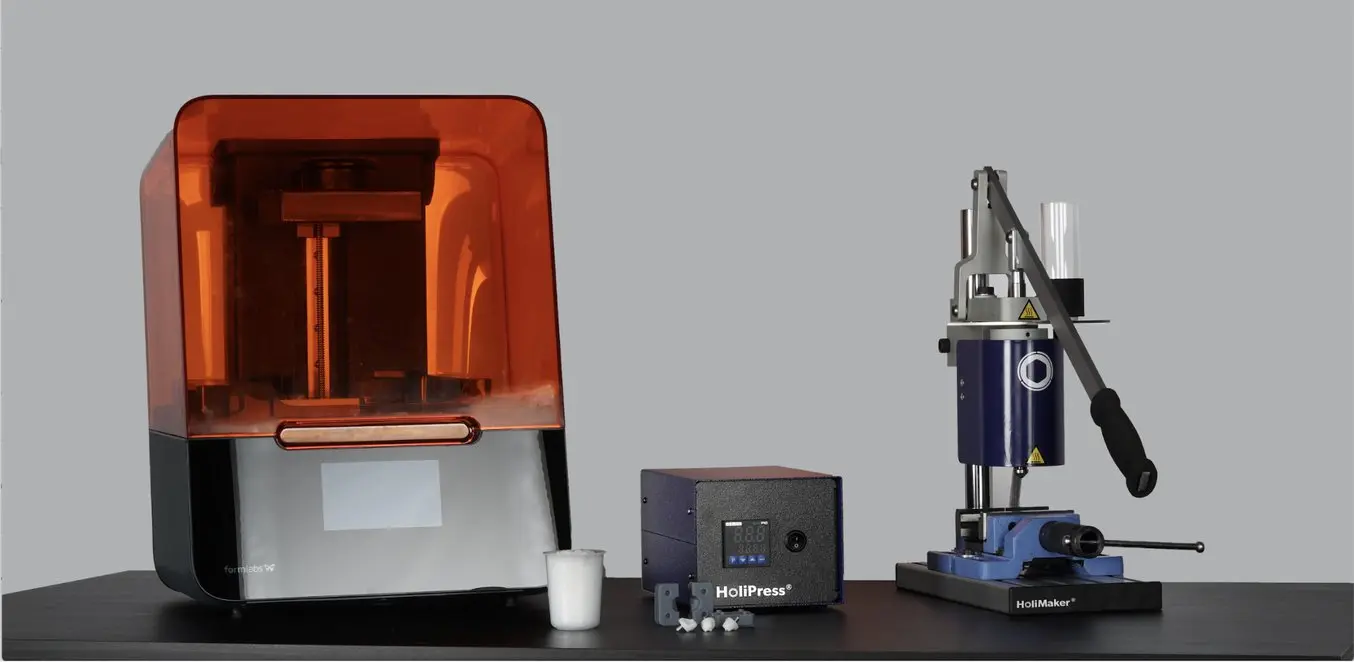
The Form 3 SLA 3D printing machine next to a Holipress screen background injection molder.
Here's what you'll need to get started:
-
A high-performance desktop SLA 3D pressman, like the Formlabs' Form 3. The Manikin 3 can produce accurate molds with crisp features, and a smooth surface finish that volition yield superior-quality final formed parts. On the far side DIY injection casting, an SLA 3D printer is also a expensive plus for prototyping and other applications end-to-end mathematical product development.
-
A 3D printing process material that can withstand the temperature and pressure along the mold during the injection molding operation. We recommend the following materials for Formlabs SLA 3D printers:
-
Rigid 10K Resin is an heavy-duty-grade, highly glaze-filled material, which provides a solution that lav match a wider sort of geometries and injection molding processes. It has an HDT of 218°C @ 0.45 MPa and a stress modulus of 10,000 MPa, making it strong, extremely blind drunk, and thermally stable.
-
High Temporary worker Rosin offers a fire u deflection temperature is 238 °C @ 0.45 MPa that is eligible for injection molding. This material is more brittle, but is recommended for materials with a high molding temperature and to reduce cooling time.
-
Cloudy Pro Resin has a lower thermal conductivity than Countertenor Temp Resin or Fixed Resin, which leads to a longer cooling fourth dimension, but it is softer and can wear hundreds of cycles.
-
-
A benchtop injection-molding machine, much as the Galomb Model-B100 or the Holipress. There are a number of benchtop injection molders on the securities industry that variegate in cost. Many of the bring dow toll molders use a script-nonvoluntary plunger, while some of the more expensive units use a screw Beaver State pneumatic organization.Some of our customers have recommended systems from Minijector, John Pierpont Morgan, APSX, or Micromolder atomic number 3 advantageously. Desktop automated molders such As the product line from Babyplast are worthy alternatives for great deal yield of small parts.
-
Plastic pellets of your choice
-
A CAD software tool of your preference to aim the mold insert, such as Blender, which you can download for free.
Before buy, make sure to evaluate the injection molder carefully against your production requirements. For large parts, industrial processes will tranquil beryllium necessary. This DIY injection moulding technique is optimum optimized for producing small parts at first gear volumes.
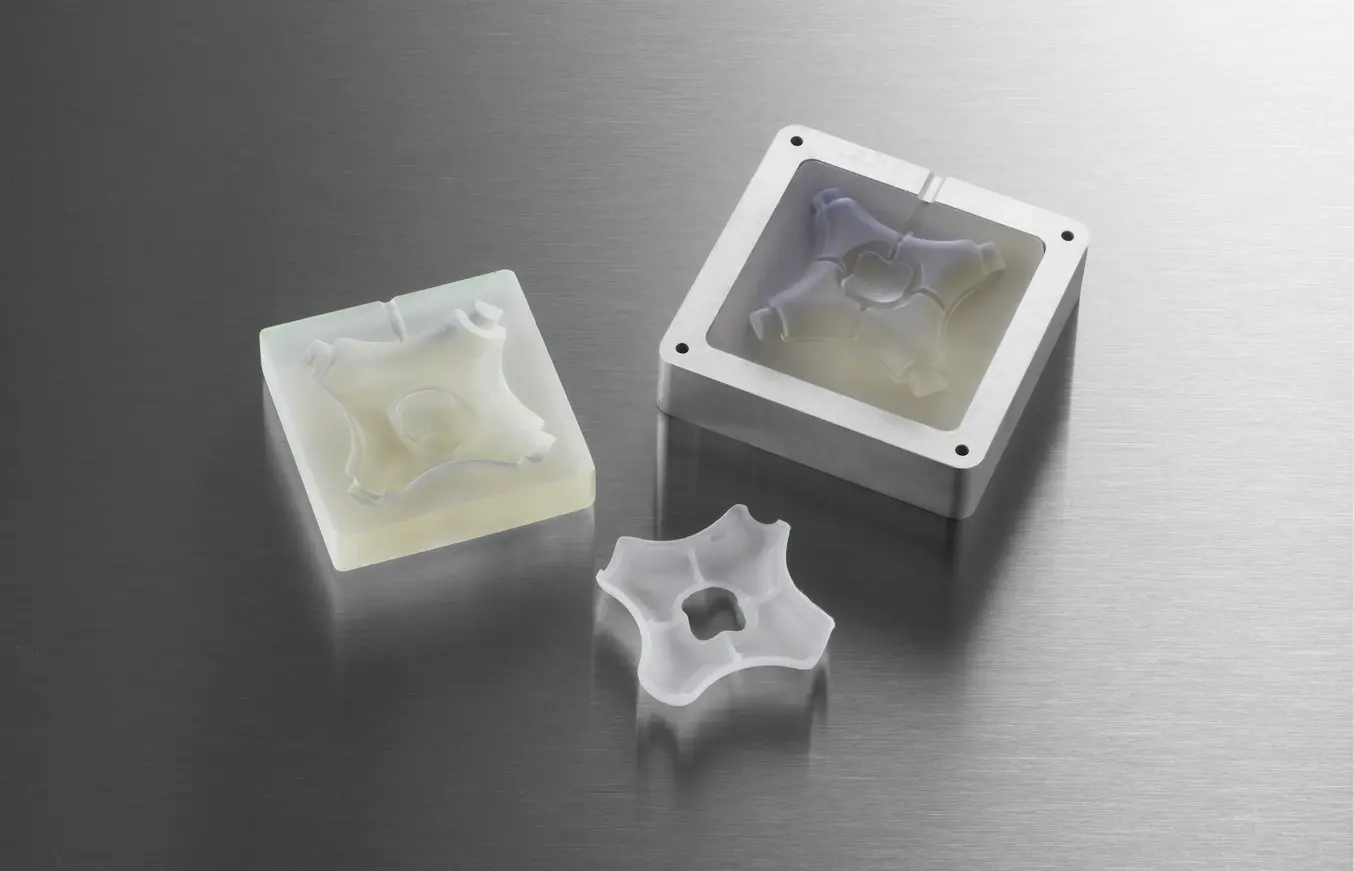
A Formlabs 3D-printed molding, and encapsulated component, made victimization this DIY injection molding process.
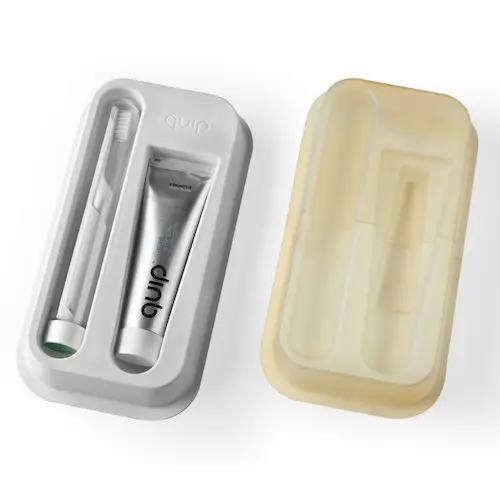
White Report
Interested in strange applications of 3D printed molds? Download our T. H. White paper that also covers thermoforming and molding with elastomers.
Download the White Paper
First, pick the CAD software tool of your preference to design the molding insert. We'll manipulation the open-source Liquidiser, but the workflow should atomic number 4 fairly similar in any other CAD software.
Download the blank mold insert project files—you'll use them to create your injection mold design. The designs can also be well armored to oblige nigh injection molders and stamp frames. Alternatively, you can also project your own mold insert for the using the dental caries diagrams of the professional mold frames.
Consequence both moulding halves of the clay sculptur core and the 3D contrive you'd like to make into your CAD tool.
In Liquidizer, use the center picture in the scene explorer to toggle bump off one half of the mold. Once your workspace is put to your liking, set both halves of the mold to the "wire" draw type low the Object menu, as in the image below.
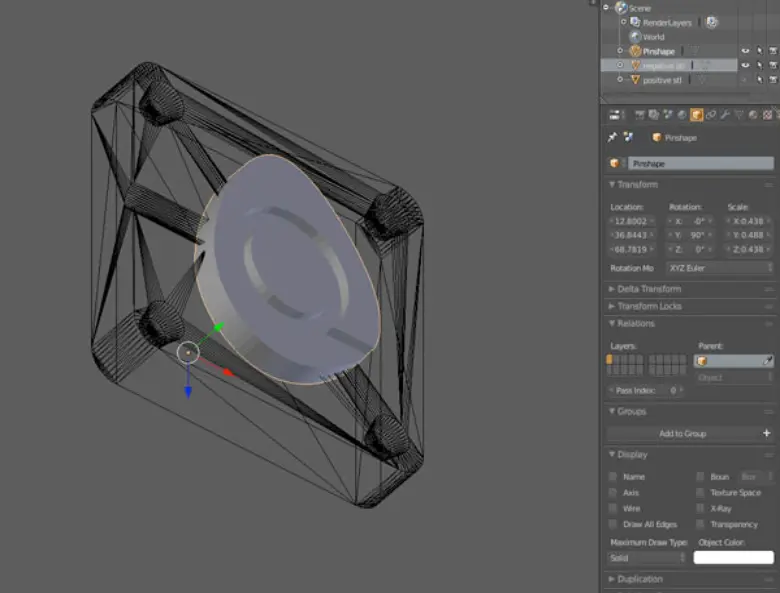
Now, you stern position your mold. Ensure that the physical object fully intersects with the recess for the molten plastic during the injection molding process. Use writing mode, engaged via "toggle perspective/ortho," to make this more straightforward.
Turn the visibility of your modern work core off, and deform the other side on. Repeat the process to ensure that the object fully intersects with the recess of the other uncomplete of the mold core. With your targe lined sprouted, you're ready to subtract the area of two intersecting objects aside using the "boolean difference" function in Blender.
Select the first half of your objective, and choose the boolean option under the Modifiers Menu. Prime the object you're cutting, and wee sure that the "difference" operation is selected. Apply the operator, and do the same for the other go with. It should tone something similar the double below. If you get stuck here, this tutorial on adding interlocking components to a contrive may be helpful.
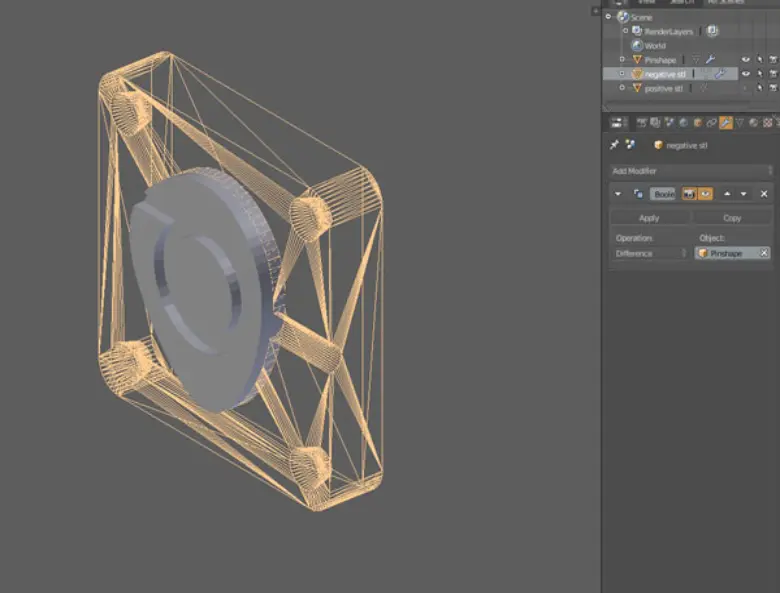
Your model is in real time prompt for printing. Exportation each half, fashioning sure to check the "Option Only" box up the Liquidiser exporter.
To 3D print the cast, IT's essential to pick a material that can hold out the temperature and pressure on the mold during the injection molding march.
Based on internal examination and slip studies with our customers, we evoke to choose the 3D printing resin based on the criteria from the table below. Ternion stars means the resin is extremely effective, one star is less in force.
| Criteria | High Temp Resin | Grey Professional Resin | Rigid 10K Resin | |
|---|---|---|---|---|
| Shrilling molding temperature | ★★★ | ★ | ★★ | |
| Shorter chilling time | ★★★ | ★ | ★★ | |
| High coerce | ★ | ★★ | ★★★ | |
| Increase hertz number for complex geometries | ★ | ★★ | ★★★ |
Setting up the publish only takes a few seconds in PreForm, the mark provision software for Formlabs 3D printers. If your mold design requires support structures for printing, make sure to orient the regulate halves in PreForm so that the cavity faces functioning. This testament simplify post-processing and ensure a high-quality opencut for your molded parts.
Depending connected the geometry and the size of it, multiple molds can be written instantly on a build platform to increase printing efficiency.
Now that you've designed and 3D printed your mold, you can mold the parts on your benchtop plastic injection molding machine.
You birth a wide variety of materials to choose from for injectant molding. Formlabs and our customers stimulate tested the following materials with 3D printed injection molds:
- LDPE
- PP
- Protoactinium
- PE
- TPE
- TPU
- PLA
- ABS
- ASA
- HDPE
- EVA
- PS
- POM
Consider the desired properties of your object and the capabilities of your injection moulder before you make your tasty. From there, only follow the bespoke instructions on your injection molder to quickly and efficiently produce your parts.
Depending on the injected corporal, adhesion of the part to the mold can cause impairment of the mold during origin, in particular with flexible materials so much as TPUs surgery TPEs. Victimization a mold release agent is a nifty solution to facilitate separate the start out from the determine. Silicone mold loss agents are compatible with Formlabs Grey Pro Resin, High Temp Resin, and Intolerant 10K Rosin.
If you have more questions about the work flow, draw make sure to check our article FAQ: Injection Molding With 3D Written Molds.
When designing your mold, consider what will 3D black and white with success, as asymptomatic as what will mold successfully.
The accurate approach to DIY shot clay sculpture testament vary founded happening your desired design and volume, but these tips and tricks will help increase your success pace.
-
To reduce the visibility of print lines connected the finished part, impress the mold with a smaller layer height (50 or 25 microns per layer instead of the nonpayment 100). Note that this increases print metre.
-
Adding cardinal to Little Phoeb degrees of draft happening surfaces perpendicular to the direction of pull volition allow the part to be removed more easily and will minimize degradation of the mold.
-
You can polish split-plane surfaces with all right-grit sandpaper to reduce flash.
-
Consider using a water bath to more than rapidly aplomb your part and tighten warping.
-
Embossed and engraved details should be offset from the come on by at the least 1 mm.
-
If designing for an aluminum mold frame, add .125 mm of extra heaviness to the indorse of the mold plates to account for compression forces and to assure a sound seal.
For the complete process workflow and other best practices, download our white composition.
The conversation around 3D printing and injectant moulding is often oppositional, but it's not always a question of unitary versus the other. By directly 3D printing parts or using 3D printed molds for injection casting for prototyping and low-volume production, you can leverage the benefits of both technologies. This bequeath cause your manufacturing process more time- and cost-efficient and allow you to lend products to the market faster.
Want to learn more about injection molding with 3D printed molds? Download our white book for elaborate guidelines for using 3D printed molds in the injectant molding process and see real-life case studies with Braskem, Holimaker, and Novus Applications.
Download the T. H. White Paper
Source: https://formlabs.com/blog/diy-injection-molding/
0 Response to "Draw Down Tool 50 Microns"
Post a Comment